







Search  for anything...

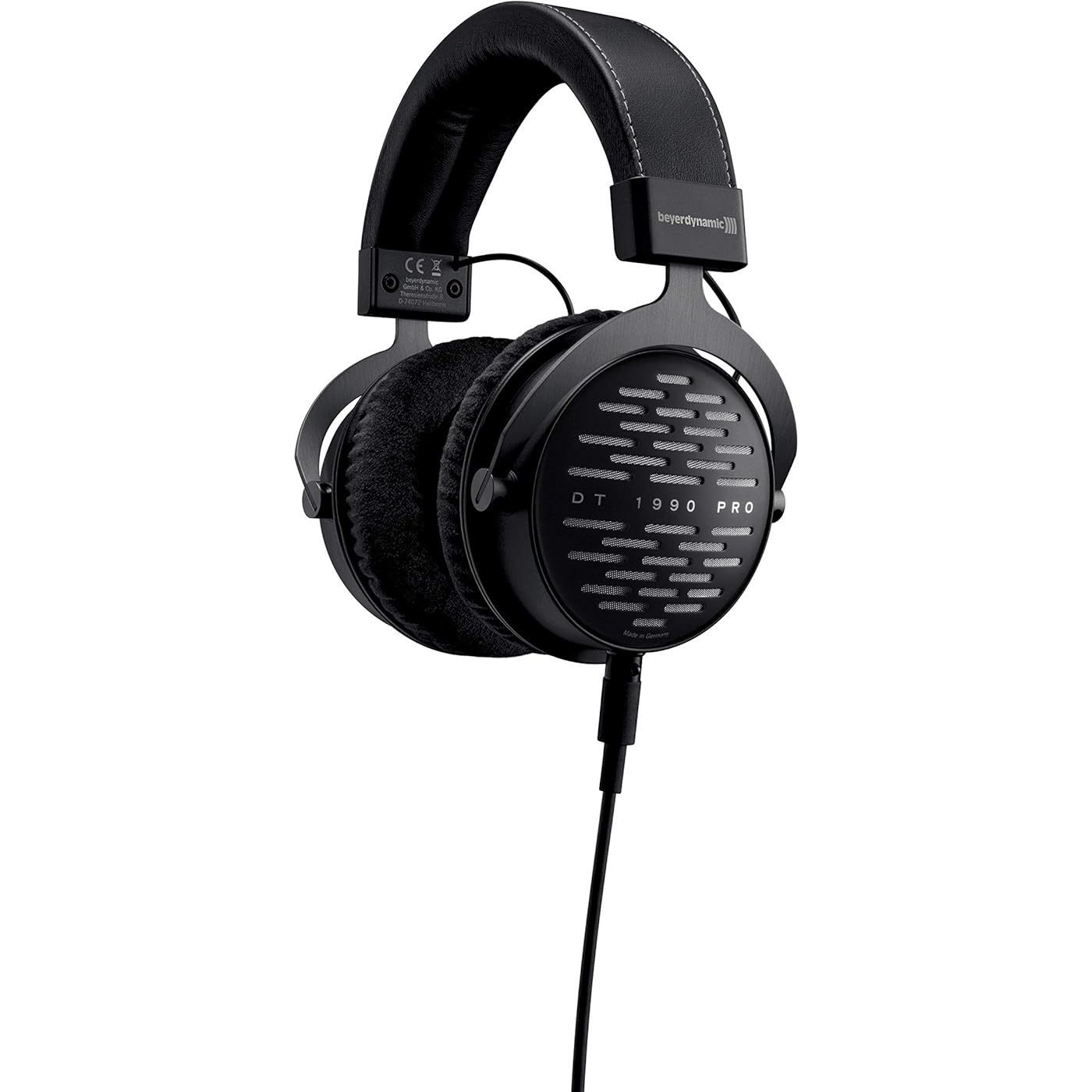
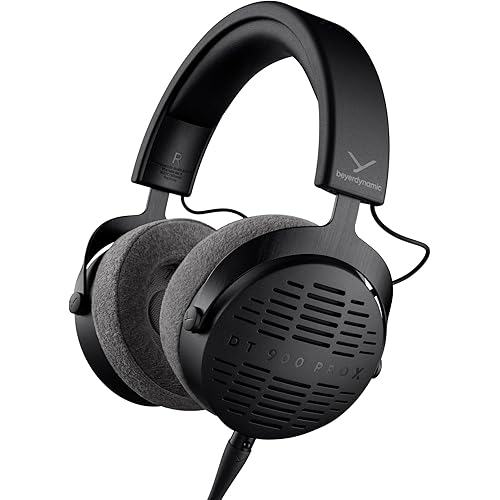
beyerdynamic DT 1990 Pro Open Studio Headphones

  • Based on 1,665 reviews
Condition: Used - Very Good
Checking for the best price...
$655.99 Why this price?

Buy Now, Pay Later


As low as / mo
  • – Up to 36-month term if approved
  • – No impact on credit to apply
  • – Instant approval decision
  • – Secure and straightforward checkout

Ready to go? Add this product to your cart and select a plan during checkout.

Payment plans are offered through our trusted finance partners Klarna, Affirm, Afterpay, Apple Pay, and PayTomorrow. No-credit-needed leasing options through Acima may also be available at checkout.

Learn more about financing & leasing here.

Free shipping on this product

This item is eligible for return within 30 days of receipt

To qualify for a full refund, items must be returned in their original, unused condition. If an item is returned in a used, damaged, or materially different state, you may be granted a partial refund.

To initiate a return, please visit our Returns Center.

View our full returns policy here.


Availability: Only 1 left in stock, order soon!
Fulfilled by US Seller/We ship from USA

Arrives Apr 16 – Apr 30
Order within 12 hours and 20 minutes
Available payment plans shown during checkout

Protection Plan Protect Your Purchase
Checking for protection plans...

Features

  • Open studio reference class headphones for mixing and mastering, Made in Germany
  • 250 ohms, 45 mm dynamic Tesla neodymium drivers
  • Single sided, detachable cable with mini-XLR connectors
  • Soft, replaceable ear pads and headband for long studio sessions. Headphone frequency response : 5-40,000 Hz. Nominal sound pressure level : 102 dBSPL (1mW/500Hz)
  • Delivery contents: 2 ear pads with different sound characteristics (analytical and well-balanced), two pairs of cables (3m straight and coiled), premium hard case
  • Connectivity Technology: Wired
  • Included Components: Set Of Ear Pads, Headphone, And Two Cables

Description

The DT 1990 Pro reference headphones combine these decades of expertise in headphone technology with the latest Tesla driver technology in an open-back design. Thanks to its high-resolution and well-balanced sound The DT 1990 Pro sets new standards, Not least in terms of design and workmanship. As with all beyerdynamic professional studio Headphones, The DT 1990 Pro is also handcrafted in Germany. Backed by high-quality materials and meticulous workmanship, This high-end product is a long-term investment. Together with an ingenious open-back design, The high-resolution Tesla drivers ensure a wide, dynamic and extremely natural stereo image. Titanium-coated acoustic fabric and carefully selected precision-woven textiles round off the balanced sound quality. Natural and exceptionally Spatial Sound is achieved thanks to the open-back design. The optimized Spatial Sound reproduction makes the DT 1990 Pro headphones a reliable reference for mixing and mastering applications as well as for critical listening. Choose between a well-balanced sound or Analytical sound thanks to replaceable velour ear pads. Both ear pad variants are included to finish off this impeccable studio headphone package.

Brand: beyerdynamic


Color: Black


Ear Placement: Over Ear


Form Factor: Over Ear


Impedance: 250 Ohms


Noise Control: None


Frequency Response: 5 Hz


Sensitivity: 102 dB


Headphones Jack: 3.5 mm Jack


Model Name: DT 1990 PRO


Connectivity Technology: Wired


Included Components: Set of ear pads, headphone, and two cables


Material: Fabric


Specific Uses For Product: Studio


Recommended Uses For Product: Audio Monitoring, Gaming


Compatible Devices: Cellphones


Cable Feature: Detachable


Item Weight: 1.5 Pounds


Water Resistance Level: Not Water Resistant


Control Method: Touch


Number of Items: 1


Audio Driver Type: Dynamic Driver


Audio Driver Size: 45 Millimeters


Earpiece Shape: Round


Series Number: 1990


Hardware Interface: 3.5mm Audio


UPC: 713803233758


Generation: 1


Supports Bluetooth Technology: Yes


Special Feature: Tangle Free Cord, android-phone-control


Global Trade Identification Number: 90


Manufacturer: beyerdynamic


Product Dimensions: 7 x 4 x 8.5 inches


Item Weight: 1.5 pounds


Item model number: Dt1990 Pro


Is Discontinued By Manufacturer: No


Date First Available: August 9, 2016


Units: 1.0 Count


Frequently asked questions

If you place your order now, the estimated arrival date for this product is: Apr 16 – Apr 30

Yes, absolutely! You may return this product for a full refund within 30 days of receiving it.

To initiate a return, please visit our Returns Center.

View our full returns policy here.

  • Klarna Financing
  • Affirm Pay in 4
  • Affirm Financing
  • Afterpay Financing
  • PayTomorrow Financing
  • Financing through Apple Pay
Leasing options through Acima may also be available during checkout.

Learn more about financing & leasing here.
Top Amazon Reviews


  • yeah. these.
For reference, I own or have owned DT880/600s, DT770/80s, T90s, HD600s, 598s, 712Pros, and have spent a goodly amount of time with the LCD-2s, HD800s, and the DT1990's big brothers, the T1/v2s. I have been amping the dt1990s with all kinds of stuff, but have found the best synergy with the Beyerdynamic A20 and the Lake People RS 02. I listen mostly to 1950s-1960s jazz. Think Roach and Brown, Ammons and Stitt, Blakey, Silver, Mingus, Ellington, Gillespie, Monk, Peterson, Davis, Coltrane, Coleman, Green, Montgomery, Hubbard, Shorter, etc. etc. A lot of Zorn (mainly Masada) and some contemporary classical (Reich, Riley, Bryars, Arnalds, Frahm, Guonadottir). When I'm listening to pop, it's usually stuff by Nick Cave, Greg Cartwright, or Jason Molina (RIP). Oh, also, Thee Oh Sees are the shiz. Let me just say that the DT1990s come ready to rumble no matter your tastes. Simply put, they just feel "right." That is, from the moment I put them on, I had the sense that I was finally hearing the music as the engineer intended. No coloration. No tricks, no treats. Just the straight business (for better and worse, depending on the quality of the original recording). It puts you right in the studio, in the first few rows of the concert hall, or at that corner table close enough to share your drink with the drummer. As transparent a set of headphones as I've ever heard. Now, I've always loved the HD600s for jazz (personally, far more than the HD650s), but I always felt that something was missing...a more robust low end. In this sense, the DT1990s deliver fully on the promise of the HD600s. Just as neutral, just as precise in terms of imaging, but with a more rock solid and effortless delivery (and much better built and loads more comfortable on the head). Ultimately, these headphones are miles beyond the other headphones I own (with the HD600s a distant second [though still a terrific set of phones]) The HD800s are fantastic, but in truth, I always found the soundstaging too exaggerated for the sort of small ensemble/chamber stuff I listen to. Really, they always took me out of the scene instead of putting me there as the DT1990s do. Personally, I've never found planar magnetics to play all that well with jazz and the LCD-2s are no exception. Just a tad on the slow side for my taste. I always felt like they were playing catch up through really busy sections, and frankly, just a touch dark. The T1s might be more detailed, but not $400+ more detailed IMHO. I say skip the T1s and invest in these bad boys instead. And regarding the price: sure, it seems a bit steep. But like all passive transducers, these headphones should last you decades. Hell, I'm still in love with (and have never felt compelled to replace) my mid-90s JBL monitors. Do yourself a favor and skimp on that new TV (which, if not relative junk from day one, will be obsolete in 4 years or dead in 8) and treat yourself to these, your new best friends for life. Oh, and by the way, I've never reviewed a product on Amazon before. With that in mind, the very fact that you are reading this review right now does these headphones more justice than my words ever could. yeah. these. you need these. ... show more
Reviewed in the United States on July 1, 2017 by Paul R.

  • DT1990 Pro - Ideal Where Beautiful Sound Is Not A Virtue
Beyerdynamic recently released 3 new headphone models selling for $600, the DT1770 Pro, the DT1990 Pro, and the Amiron Home. The DT1770 Pro is a studio workhorse and does not have high-end sound quality. The DT1990 Pro and the Amiron Home are both high-end headphones. The DT1990 model number is a progression of the DT990 model number. However, the DT1990 is an entirely different sounding headphone than the DT990. But it is still ideal for the style of music that the DT990 would likely be used for. The DT1990 Pro is a high transparency headphone. Its spectral balance with its bass boosting ear cushions minimizes the need for tone controls. Its bass sound is articulate and non-boomy. Its coloration component is tone lowering which means that it's not pleasant to listen to. However, it is at worst faint for some listeners and not noticeable for most. I found its overall sound personality ideal for listening to EDM (electronic dance music) and other genres where beautiful sound is not a virtue. To be "transparent" is to pass through clearly. A headphone that masks or otherwise clouds detail in audio sound lacks transparency. A headphone that has super high transparency is a headphone that passes sound through with negligible loss in detail. There are 2 overwhelming performance characteristics that determine the overall sound quality of a headphone. They are coloration and frequency response. "Frequency response" is a more technical term for spectral balance. "Spectral balance" refers to the evenness of sound intensity across the audio frequency spectrum. Frequency response gets a lot of attention. Coloration gets none. "Coloration" is a lingering and overlaying sound that masks or clouds detail. It is produced by a driver's diaphragm in addition to the sound being reproduced from the sound source. I call this added component the "coloration component". I quantify the amplitude of this coloration component as a percent of the amplitude of the sound being reproduced from the sound source. This value of percent is an estimate that I determine during listening tests. Below is a compilation of headphone models that I have evaluated over the past 3 years. This compilation provides a perspective on how different models compare with respect to transparency. Tier numbering in my past 2 headphone rankings has been completely redone for this compilation. Headphone models new to my rankings in this compilation are placed in brackets. RANKED IN ORDER OF INCREASING COLORATION DISTORTION: TIER 1: Col. Dis. 0.3% ... Not audible Beyerdynamic T1 (original)/(2nd Gen); [Focal Utopia] TIER 2: Col. Dis. 0.5% ... Tone lowering [Beyerdynamic DT1990 Pro] TIER 3a: Col. Dis. 0.7% ... Tone neutral ... Wide BW col. comp. Beyerdynamic T70/T70p (closed) TIER 3b: Col. Dis. 0.7% ... Tone neutral Beyerdynamic DT880 (all ohmic values); Beyerdynamic DT990 (all ohmic values); Beyerdynamic T5p (original)/(2nd Gen) (closed); [Beyerdynamic Amiron Home]; Ultrasone Edition 12 TIER 4a: Col. Dis. 1.0% ... Tone neutral ... Wide BW col. comp. HiFiMan HE400i/HE560/HE1000; [HE1000 V2] TIER 4b: Col. Dis. 1.0% ... Tone neutral Shure SRH1840 TIER 5: Col. Dis. 1.5% ... Tone lowering AKG K812 Pro; Beyerdynamic T90; McIntosh MHP1000 (closed) TIER 6a: Col. Dis. 2.0% ... Tone neutral ... Wide BW col. comp. B&O H6 (original)/(2nd Gen) (closed); Abyss AB-1266 TIER 6b: Col. Dis. 2.0% ... Tone lowering ... Wide BW col. comp. Fostex TH900 (closed) TIER 7: Col. Dis. 3.0% ... Tone lowering Grado SR60e/SR80e/SR125e/SR225e/SR325e/PS500e/GS1000e; Audeze EL-8 (open)/(closed); Audeze LCD-2/LCD-3/LCD-4; EnigmAcoustics Dharma D1000 TIER 8a: Col. Dis. 5.0% ... Tone neutral Sennheiser HD800/HD700; AKG K701/Q701/K702; Bower & Wilkins P7 (closed); Grado PS1000 TIER 8b: Col. Dis. 5.0% ... Tone lowering Audeze LCD-X; HiFiMan HE400s; HiFiMan Edition X; NAD VISO HP50 (closed); Audioquest Nighthawk TIER 8c: Col. Dis. 5.0% ... Tone raising Grado RS1e/RS2e TIER 9: Col. Dis. 7.0% ... Tone lowering [Beyerdynamic DT1770] (closed) TIER 10: Col. Dis. 10.0% ... Tone neutral ... Wide BW col. comp. Sennheiser HD600/HD650 Closed back headphone models are indicated by "(closed)". Headphones that have a tone neutral coloration component are a fit for genres where beautiful sound is a virtue. Headphones that have a tone lowering coloration component are a fit for genres where beautiful sound is not a virtue. Tone lowering coloration is unpleasant but can be appealing for EDM and badass genres. Headphones indicated by "Wide BW col. comp." have a wide bandwidth coloration component that makes them sound "musical". Headphones not indicated by "Wide BW col. comp." have a narrow bandwidth coloration component that makes them sound "clinical". The Sennheiser HD800 in Tier 8a is a highly popular headphone model in the audiophile world. What makes it popular is its nice sound at first listen, and that produces sales. However, as one ups one's depth of perception with this headphone one can not hear more detail because its coloration masks it. Being able to up one's depth of perception can be equated to looking at the sky at night with a telescope. Without a telescope one can see only so much detail. With a telescope at low power one can see more detail. With the same telescope at high power one can see even more detail. With headphones one can hear more and more detail as one moves up the order of tiers from Tier 8a to Tier 1. But, there is a catch here in that one needs to develop the mental skill necessary to do so. Professional musicians who play acoustic instruments develop this skill naturally in their effort to hear their performance better. Headphone enthusiasts also develop this skill naturally in their effort to hear their music better. When evaluating high-end headphones, it can take me up to 1.5 hours to raise my depth of perception from base line (Tier 8a) to maximum (Tier 1). If from a point of maximum depth of perception I then go back to an HD800 headphone I feel like I have ear plugs in my ears. Its like I'm part deaf. Reviewers who can't discern the dramatic difference in transparency between a Beyerdynamic T1 and a Sennheiser HD800 don't have the metal skill to evaluate high-end headphones. This leads to argument, debate, imagination and so on. I use an amplifier with tone controls to do evaluations. I've never had a pair of headphones with which I didn't want to touch up its spectral balance. Tone controls do not degrade sound quality, not even to the slightest degree. In the following tier by tier paragraphs I comment on the headphone models in the compilation. TIER 1: Since 2010 the Beyerdynamic T1 (original) has been the real gold standard of headphones. It has a natural and nice sounding spectral balance and works beautifully with tone controls. The T1 (2nd Gen) has a tilted spectral balance in favor of bass and is a bass heavy version of the T1 (original). The Focal Utopia also has a tilted spectral balance in favor of bass. Its low end spectral balance is nicer than that of the Beyerdynamic (2nd Gen) but comes with a boomy bass. It has a slight lushness to its sound due to audible harmonic distortion. This audibity is made possible by its extremely high transparency. The Utopia has the best "wow factor" of any headphone made. All 3 headphone models have cavernous ear chambers. For a detailed comparison of all 3, check out my review on the Focal Utopia "From Bright Sounding to Bass Heavy". TIER 2: The Beyerdynamic DT1990 is supplied with 2 pairs of ear cushions, one with 20 vent holes for bass boosting and one with 4 vent holes for best bass detail. The 20 vent hole pair is the one that comes installed on the headphones and it mechanically tunes up the bass. It is the same as the one used on the Beyerdynamic T1 (2nd Gen). You use that one when you don't have tone controls. If you have tone controls and want more bass detail you then install the 4 vent hole pair. To install the 4 vent hole cushions retract the ear cup/headband extensions and remove the installed cushions. To install a cushion find the notch on the mounting ring. The mounting ring and the ear cup flange form a grove that the lip of the cushion fits into. With a finger behind the lip guide the lip into the groove on the right angle side of the notch (not the sloping side) until about a quarter way around. Then twist the cushion clockwise until fully installed. For classical music listeners with a high depth of perception the T70/T70p, the DT880, and the T5p (original) would be a better choice. Better still, would be the Tier 1 models. TIER 3a: The T70p is a 32 ohm version of the 250 ohm T70. It has an angled mini jack with a cable that is only 4 feet long. It is intended for use with portable devices. Both have a nice spectral balance and to a small degree a soft seductive sound. Their seductive sound may be due in part to the mushing effect of enclosure sound in closed back headphones. Their bass can be boosted by converting to bass boosting leather ear cushions. Replacing their ear cushions is easy. The T70 paired with the Beyerdynamic EDT 5P LB genuine leather ear cushions is like a poor man's Focal Utopia. The EDT 5P LB cushions will boost the T70's bass so as to minimize the need for tone controls. The imitation nubuck leather cushions supplied with the T70 are shallow. Should one want a deeper cushion, any ear cushion used on any other Beyerdynamic model appearing in this review will physically fit the T70. But different cushions affect bass emphasis differently. For example, the Beyerdynamic EDT 770 SG cushions will make the T70 bass heavy. The T70 paired with the EDT 5P LB genuine leather cushions is one of the 3 gems of the headphone world, the other 2 being the Beyerdynamic T1 (original) and the Focal Utopia. TIER 3b: The coloration components of 4 Beyerdynamic headphone models indicate that they have the same diaphragm material. They are the DT880, the T5p (original), the T5p (2nd Gen), and the Amiron. Since 2006 the DT880 has been a constant of the Beyerdynamic line. Its spectral balance gives it a bright sound which can be balanced off with bass boost. An integrated amplifier with at least 10dB of bass boost would be good for this model. The T5p (original) is a closed back version of the DT880 with cavernous ear chambers like that of the T1. The T5p (2nd Gen) is like the original T5p except that the bass has been tuned up. One reviewer commented that it was like Beyerdynamic added a subwoofer. Not a good upgrade. The Amiron continues the trend towards bassier sound so that users can get adequate bass without the need for tone controls. It is a bass heavy and boomy version of the DT880. Since the DT1990 Pro with its bass boosting cushions and the T70 or T70p with the EDT 5P LB bass boosting leather cushions do the same but with better overall sound quality, I cannot recommend the Amiron. The DT990's diaphragm is made of a similar if not the same material as that of the DT880. It has a "V" type spectral balance where the treble is overly emphasized and the bass is boomy. The treble needs a tone control to tone it down so one needs an integrated amplifier. If one gets an integrated amplifier then one has a bass boost capability for a DT880 with its smoother high end and more articulate low end. The Ultrasone Edition 12 has an overly accented treble. TIER 4a: I re-evaluated the Tier 4a HiFiMan headphones for this review. This time I compared them directly to the Beyerdynamic T70 using popular music with heavy and light bass content. I found that the HiFiMan models do not match the T70/70p in transparency and they clearly belong a step below in tier ranking. TIER 4b: The headband of the Shure SRH1840 is so uncomfortable that placing a foam pad under it isn't enough. Tiers 5 through 10 are too far down in transparency compared to the top models to recommend. The only thing of interest here is that the B&O H6 is good for escaping the recording studio's acoustics and the Abyss AB-1266 is a good upgrade to the Sennheiser HD600/HD650's muddy sound. The HD650 is a muffled version of the HD600. Why buy the top tier models? You buy the top models so that you don't have to upgrade when your depth of perception improves. Many audiophiles spend a lot of time and money buying various headphone amplifiers and DAC's trying to improve on something that can't be improved. And then there's the so called "burn in" (break in) period. That's when audiophiles spend hours listening to a new pair of headphones until their minds fully adapt to the offending coloration component. You can avoid all of this by choosing a high transparency headphone. If you buy an integrated amplifier with tone controls, you then have the pleasure of tone adjustment along with no headphone compatibility issues. RECOMMENDATIONS: $200 - Beyerdynamic DT880 - Moderately bright sound $550 - Beyerdynamic T70/T70p - Closed back w/seductive sound $600 - Beyerdynamic T70/T70p w/EDT 5P LB leather cushions - Poor man's Focal Utopia $600 - Beyerdynamic DT1990 Pro - Best where beautiful sound is not a virtue $800 - Beyerdynamic T5p (original) - Closed back version of DT880 w/cavernous ear chambers $1000 - Beyerdynamic T1 (original) - Best realism and best overall sound $1000 - Beyerdynamic T1 (2nd Gen) - Bass heavy version of T1 (original) $4000 - Focal Utopia - Out of this world "Beats" Update - March 28/18 For more evaluation of the Amiron Home and 4 audiophile myths go to my recent review "Amiron Home - Good for Those Who Like to Wallow in Bass" - March 28/18. The EDT 5P LB leather cushions are not available at this time. For more bass boosting cushion options go to my recent review "T70 - One of the 3 Gems of the Headphone World" - March 27/18. ... show more
Reviewed in the United States on March 21, 2018 by Stanley Foote

Can't find a product?

Find it on Amazon first, then paste the link below.
Checking for best price...